Load sharing & Synchronizing modules
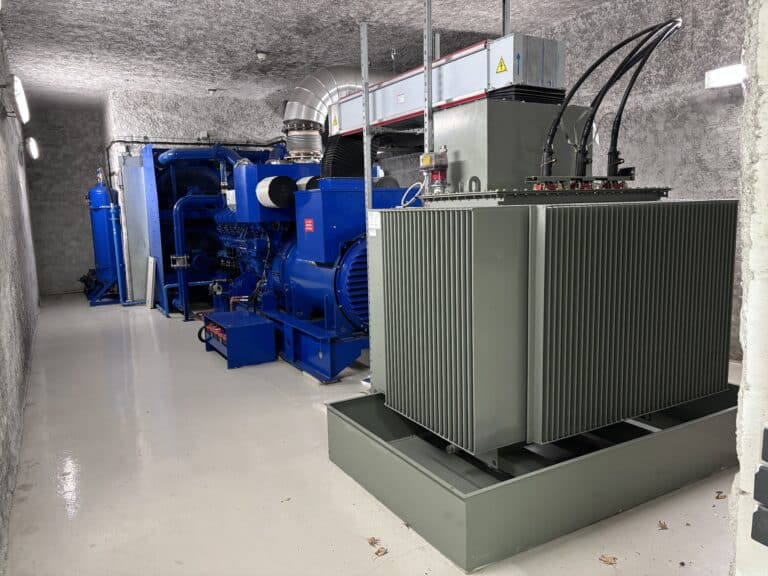
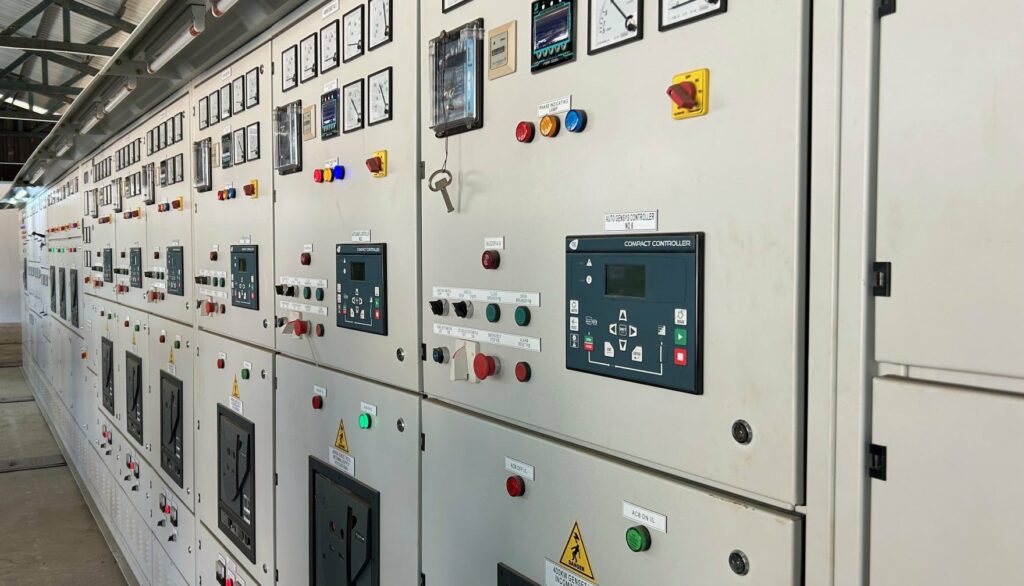
CRE Technology's load sharing & synchronizing modules are advanced solutions designed to automate the synchronization and load distribution between one or more generator sets and the main utility grid. These synchronization modules continuously compare voltage, frequency,phase and phase sequence parameters, then issue a close command when alignment is achieved. By ensuring matched values across all systems, they allow safe and efficient connections. Synchronizing controllers ensure each generator is sharing active and reactive power with the others, preventing any potential issues such as surges, imbalances, or damage. These products are built to industrial standards, offering a dependable option for various use cases across telecommunications, industrial electric systems, healthcare, military and critical infrastructures.
Our products
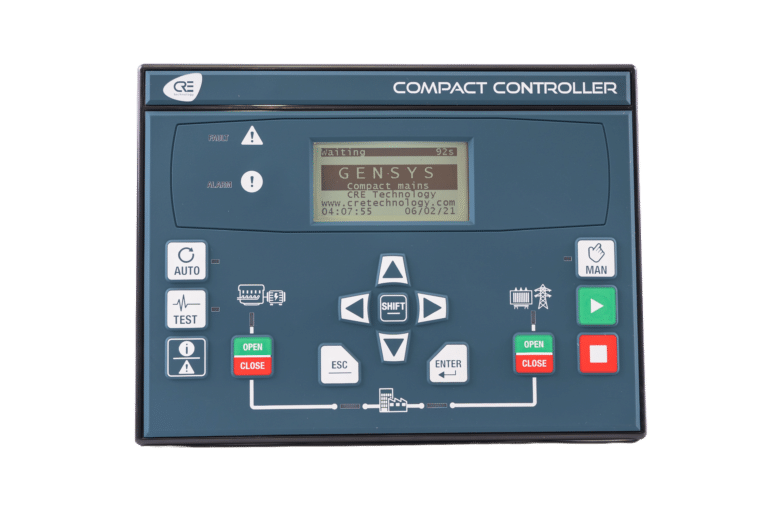
GENSYS COMPACT MAINS
The GENSYS COMPACT MAINS is designed to efficiently manage the continuity of the power supply while ensuring precise synchronization between the generator and mains.
Add to quote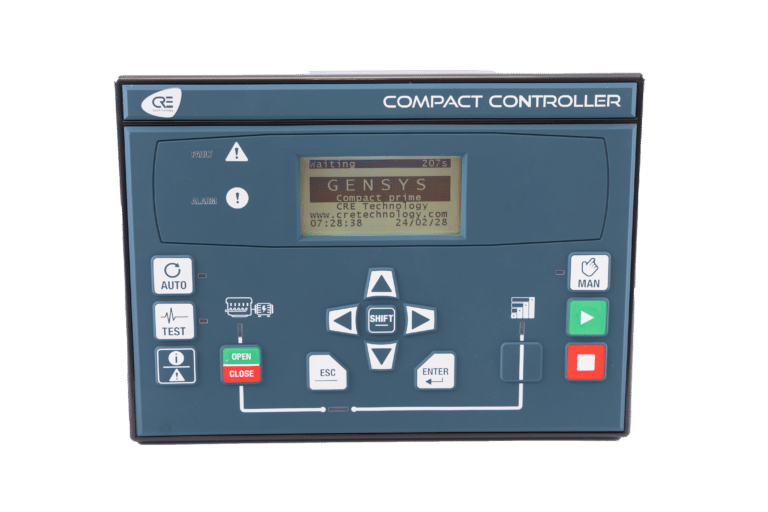
GENSYS COMPACT PRIME
The GENSYS COMPACT PRIME is designed for advanced management of multiple generators in power plants, while offering interoperability with other types of energy sources for more complex systems.
Add to quote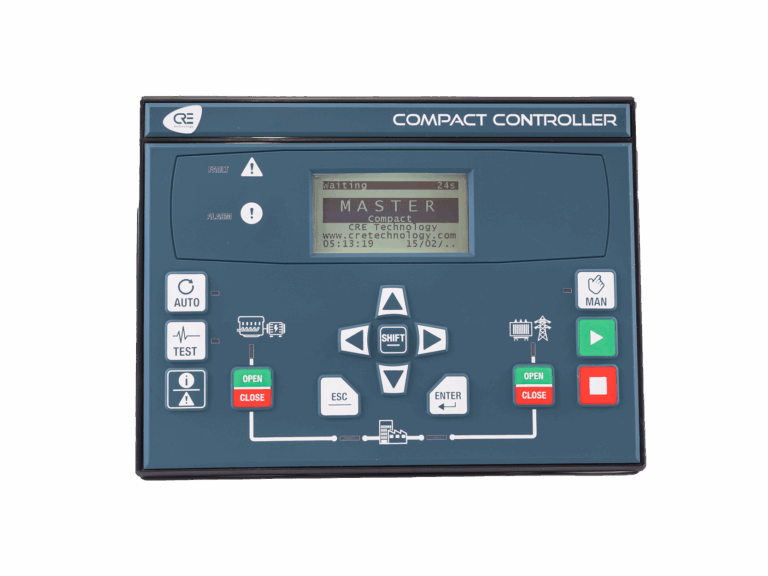
MASTER COMPACT
The MASTER COMPACT is designed for centralized management of mains incomers and their synchronization with generators, particularly in complex systems with several mains and generators.
Add to quote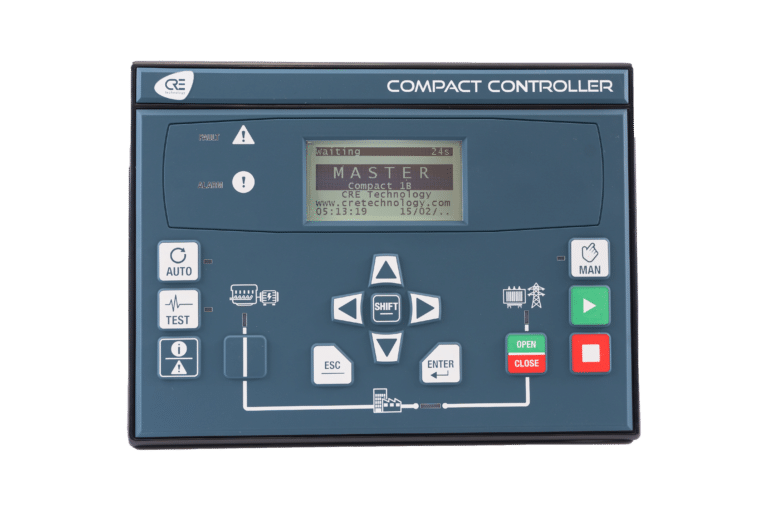
MASTER COMPACT 1B
The MASTER COMPACT 1B is designed to manage a mains incomer with a single circuit breaker. It allows advanced interoperability with various energy sources, such as generators, inverters or other mains incomers.
Add to quote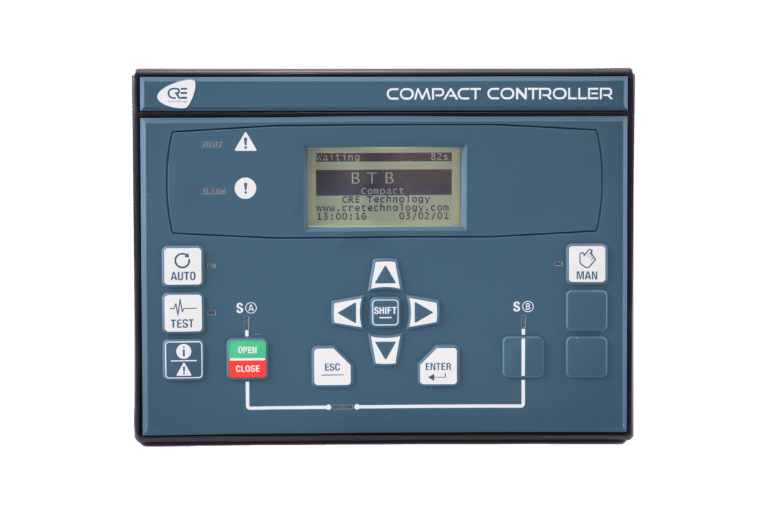
BTB COMPACT
The BTB COMPACT is designed to manage a tie-breaker, which is essential for segmenting a facility's busbar into multiple separable busbars, while ensuring precise synchronization between the different sources.
Add to quote
Customer needs and challenges
Here is an overview of the key challenges and expectations faced by integrators and engineers, who are looking for smart, simplified systems that streamline the configuration and long-term management of synchronization.
- Custom configuration and integration capabilities: Each system presents unique requirements. Our synchronizing modules allow users to build tailored configurations with ease, creating systems that adapt to site-specific conditions and electrical architectures. Whether for public instance grids or isolated facilities, they offer the flexibility to match custom design goals and simplify the installation process. Our preconfigured modules ensure easy deployment, even in complex applications with mixed generator versions and voltage ranges.
- Optimized generation and cogeneration (CHP): For customers implementing combined heat and power (CHP) systems, synchronizing modules are essential for maximizing overall efficiency. These products allow simultaneous production of electricity and usable heat by ensuring precise synchronization between the generator and the utility grid. Maintaining stable active and reactive power enables seamless export of excess electrical power while capturing thermal energy locally—reducing energy waste and operating costs.
- Flexible load management: Rather than relying on a large generator, synchronizing several smaller gensets provides redundancy and improves availability. Units can be added or removed depending on the load level or maintenance cycles. Load sharing logic determines the starting and stopping of generators, helping reduce fuel usage and equipment wear. This ensures every set runs within its optimal range while leaving reserve capacity protected for peaks or emergencies.
- Preventing blackouts: When utility voltage returns, the synchronizing module matches all parameters between the generator and the grid, issues a delayed close command, and transfers the load smoothly. This eliminates blackout occurrences during source switching. Sync modules maintain consistent output and prevent reverse power faults during the handover. Automatic synchronizing procedures are enabled through preset timing values.
- Scalability to complex systems: CRE’s synchronizing modules are designed to scale from basic single-generator setups to complex multi-source installations. Whether your system includes one generator and a utility grid, or a large power plant with multiple generators, grid connections, and tie-breakers, our controllers work together seamlessly to ensure safe synchronization, load sharing, and coordination. The architecture supports up to 40 modules in the same installation, enabling robust control even in segmented or multi-bus configurations.
Full project support
In addition to hardware, CRE Technology offers end-to-end support. Our experts carry out pre-studies and technical audits, assist with system design and integration, and support the installation of control solutions tailored to the use and architecture of each site. We work alongside integrators from planning to commissioning and beyond, to ensure that the solution meets your operational requirements. Our website provides documentation and direct contact options for any technical questions or requests for project assistance.
Related applications
-
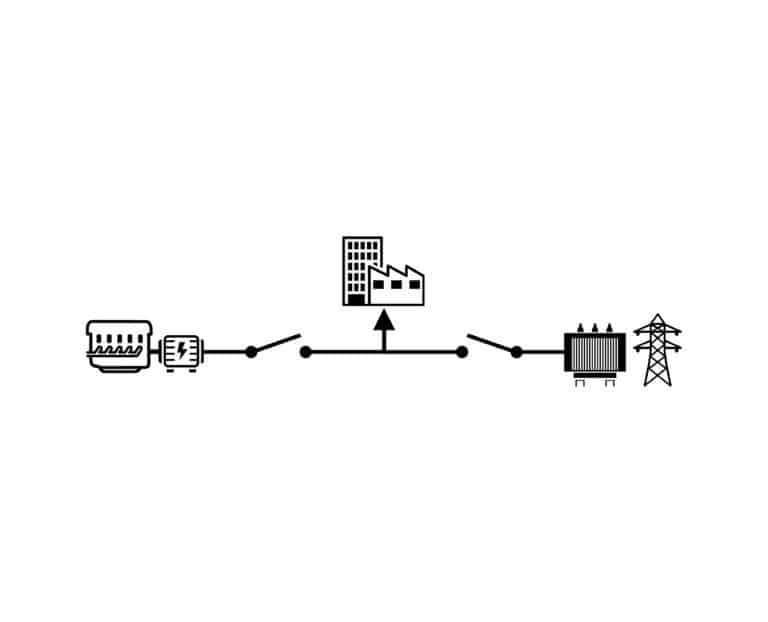
Single genset + mains in paralleling mode
In this application, the energy source is a single thermal generator associated with a main electrical grid, operating in static paralleling or no break change over mode. This configuration makes it possible to switch between the two energy sources without any interruption, guaranteeing uninterrupted power supply. In this way, the load can be supplied seamlessly from either the thermal generator or the main electrical grid, depending on requirements or the availability of the sources. This system is particularly advantageous for installations where stable, reliable power supply is essential, ensuring seamless, uninterrupted transition between different energy sources.
Discover -
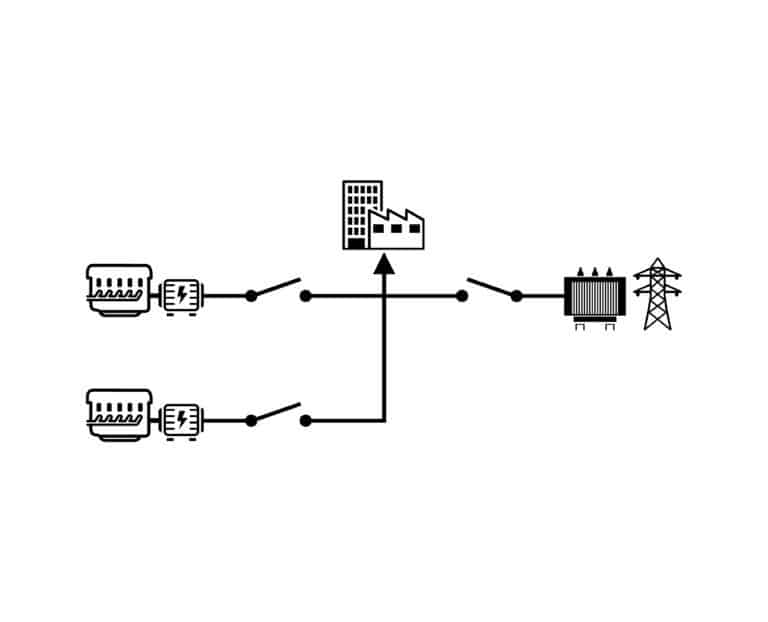
Multiple gensets paralleled with 2 mains breakers
In this application, the energy source is a power plant consisting of multiple generators, up to 32 units, which can be paralleled to each other and associated with a main electrical grid. The system operates in static paralleling or no break change over mode, allowing seamless transition between the different energy sources without any interruption, thus ensuring continuous, uninterrupted power supply to the load. To guarantee effective protection and management of the system, it is equipped with both a mains circuit breaker and a circuit breaker on the power plant busbar. The mains circuit breaker ensures safety and isolation of the electrical mains, while the power plant busbar circuit-breaker protects and controls the entire multi-generator power plant, providing optimized management of energy flows, enhanced safety and easier maintenance. Ideal for installations where reliability and continuity of power supply are paramount, this solution ensures optimum performance by integrating flexibility, protection and efficiency.
Discover -
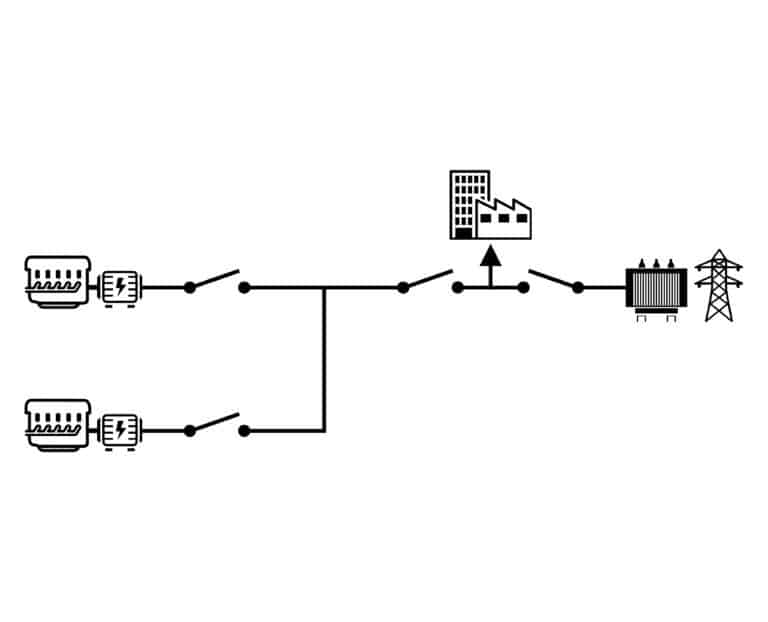
Multiple gensets paralleled with mains breaker
In this application, the energy source consists of a power plant composed of multiple thermal generators, up to 32 units, which can be paralleled to each other and associated to a main electrical grid. The system operates in static paralleling or no break change over mode, enabling switching between the different sources without any interruption, thus ensuring uninterrupted power supply to the load. A particular feature of this configuration is the absence of a circuit breaker on the power plant busbar, simplifying the electrical architecture while optimizing implementation costs. This solution is particularly well suited to installations where continuity and reliability of the power supply are essential, offering a smooth, uninterrupted transition between the thermal generators and the main electrical grid.
Discover -
Multiple gensets paralleled with multiple mains
In this application, the energy source is a power plant consisting of multiple generators, up to 32 units, which can be paralleled to each other and associated with several grid incomers. Each grid incomer supplies a specific load, which can be backed up by the thermal generator central unit if required. This configuration offers maximum flexibility, with the possibility of switching between the electrical mains feeders and the thermal generators to ensure continuous, reliable supply to the loads. In the event of failure or interruption of one of the mains supplies, the generator station can immediately take over, guaranteeing uninterrupted power supply. This system is particularly advantageous for critical installations where power supply stability and redundancy are essential, ensuring optimized management of energy sources and enhanced protection against mains failures.
Discover -
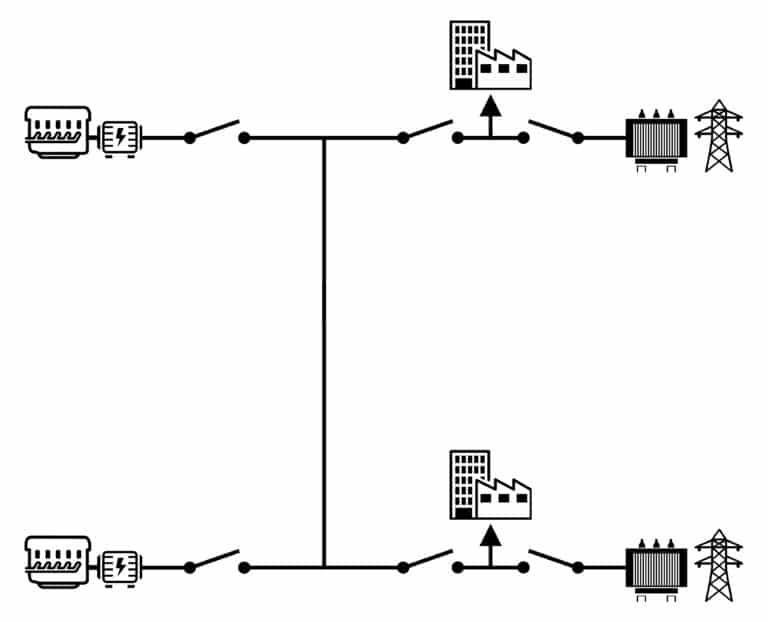
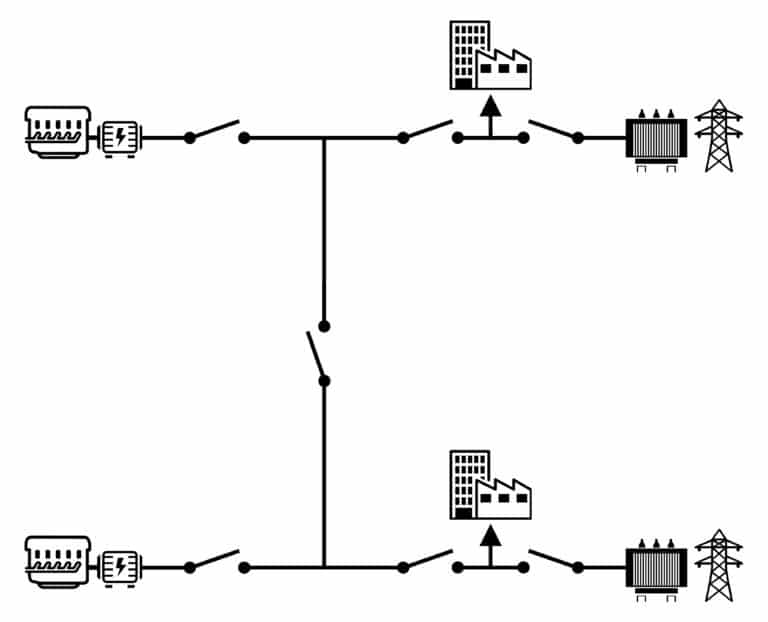
H configuration with 2 generators + 2 mains + bus tie breaker
In this application, the energy source is a power plant equipped with two thermal generators associated with two mains supplies, and fitted with a tie-breaker. The tie-breaker makes it possible to isolate a generator with its mains incomer , while offering the possibility of backing up the load supplied by the other mains incomer in case of failure. This configuration ensures greater flexibility and reliability, enabling a continuous, stable power supply to be maintained even in case of failure on one of the mains feeders. It is ideal for installations where continuity of service is essential, ensuring that the critical load remains supplied without interruption.
Discover